
Lumber Camp technologies are free
Double-Bit Axe, Bow Saw and Two-Man Saw all arrive automatically as you age up. That is 550 food and 350 wood you never spend, and the first one applies itself the moment you reach Feudal.

Officially a Monk and Battle Elephant civilization — in practice a flexible one that can rush with infantry on Arabia and boom into elephants on Arena. This guide covers the popular Arabia and Arena strategies, the third build worth knowing, every tech-tree gap you must plan around, the Bayinnaung campaign, and how much of it matches the real Toungoo Empire.
What you actually get
An economy bonus that arrives free, an infantry bonus that grows every age, and two religious bonuses that together make the Burmese the best relic civilization in the game.
Double-Bit Axe, Bow Saw and Two-Man Saw all arrive automatically as you age up. That is 550 food and 350 wood you never spend, and the first one applies itself the moment you reach Feudal.
Cumulative from the Feudal Age, so Burmese Men-at-Arms hit harder than anyone else's on arrival. It stacks on top of a complete Blacksmith infantry line, and it never stops applying.
Redemption and Sanctity are near-mandatory for a monk push and both are half price. Take everything except Faith and Herbal Medicine and you save around 819 gold — roughly eight extra Monks.
Before you research anything. Add Howdah for another +1/+1 and your elephants shrug off arrow fire that would shred anyone else's, which is what makes them a siege substitute.
Unique unit
Ranged cavalry with enormous damage and roughly 20% accuracy. The trick is that missed shots still deal full damage to whatever they land on, so a mass of Arambai behaves like area damage against clumped units. Costs 75 wood, which pairs neatly with your free Lumber Camp upgrades.
Trains at the Castle · 12 attack, 15 elite
Castle Age unique tech
Battle Elephants gain +1/+1 armour on top of the civilization bonus. This has been changed repeatedly — it was +1/+2 during Dawn of the Dukes and is +1/+1 again now, with the difference moved into the free civ bonus instead.
Stacks with the +1/+1 you already have
Imperial Age unique tech
Stable units gain a large attack bonus against archers. Read the current wording carefully: it used to be an anti-building bonus, it now targets archers, and it no longer affects Arambai at all. Cavaliers can kill Arbalesters in two hits with it.
Your answer to having no Arbalester of your own
Team bonus
You and your allies see every relic on the map from the first second. Combined with half-price monastery technologies, this is the strongest relic-control package in the game — and a hard counter-pick against Lithuanians and Aztecs.
Applies from the start of the game
The unique unit, in numbers
The most volatile unit in the game. Individually unreliable, collectively devastating — and it has been rebalanced more often than almost any other unique unit.
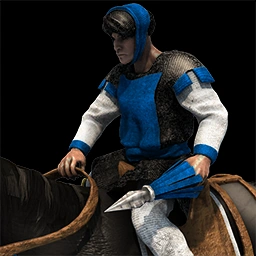
Castle Age · trains at the Castle
12 attack · 75 wood
Roughly 20% accuracy.
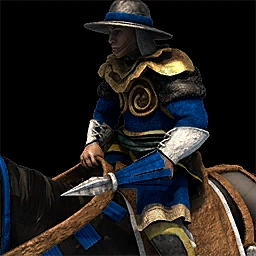
Imperial Age · Elite upgrade
15 attack · 75 wood
Now benefits from Parthian Tactics.
| Stat | Arambai | Elite |
|---|---|---|
| Attack | 12 | 15 +3 |
| Accuracy | ~20% | ~20% |
| Rate of fire | 2.0 | 2.0 |
| Wood cost | 75 | 75 |
| Missed shots | 100% damage | 100% damage |
| Range upgrades | No effect | No effect |
| Parthian Tactics | Applies | Applies |
| Manipur Cavalry | No longer applies | No longer applies |
The accuracy is the unit, not a flaw in it. Because a missed shot still deals full damage to whatever it hits, Arambai scale with density rather than precision. Six of them against a spread-out army is a waste; twenty of them against a clumped ball is one of the highest damage outputs in the game. They also ignore range upgrades entirely and have short range to begin with, so they need to get close, which is exactly why they demand hit-and-run micro. Two changes matter most: missed shots were switched to full damage, which made them scale with numbers instead of being oppressive in small packs, and Manipur Cavalry stopped affecting them, which ended the old Arambai building-demolition strategy.
Slow melee masses — infantry, Rams, Battle Elephants, War Elephants, Boyars, both forms of Konnik. Anything that clumps and cannot escape.
Siege Onagers, massed Scorpions and Bombard Cannons. In Imperial they fall off hard: Skirmishers, Halberdiers, Camels, Mamelukes, Samurai, Kamayuks and Genoese Crossbowmen all punish them.
Honest assessment
A genuinely versatile civilization with one catastrophic hole. Learn where the hole is and the Burmese are strong on almost any map.
Two map-specific strategies, plus the unique unit play
The Burmese are one of the few civilizations whose best opening genuinely changes with the map. On Arabia you rush with infantry; on Arena you wall, boom and take every relic. Both are below, along with the Arambai build that works anywhere. Villager numbers are cumulative — villager 11 is your eleventh, counting the three you start with.
Villagers 1–6
Build two houses, then all six to sheep. Scout for boars, berries and your second gold.
Villagers 7–10
To wood with a Lumber Camp. Double-Bit Axe applies itself the instant you reach Feudal, so wood income jumps 20% exactly as the Barracks and Blacksmith bills arrive.
Villager 11
Lure the first boar under the Town Center.
Villager 12
House, then a Mill on berries.
Villagers 13–14
To berries, alongside the villager who finished the Mill.
Villager 15
Lure the second boar. Push deer if they are close.
Villagers 16–18
Berries and food under the Town Center.
Villager 19
Build the Barracks, then a farm. Queue 3 Militia immediately.
Villagers 20–21
To gold, one of them builds the Mining Camp.
Feudal Age
Research Loom, then click up at 21 pop. Send the Militia out while you are still advancing.
While advancing
Pull 4 villagers off sheep to a second Lumber Camp.
Landing in Feudal
Man-at-Arms first, then Forging. Your infantry bonus gives another +1 attack on arrival, so these hit harder than any other civ's. Follow with a Blacksmith and Spearmen if you see cavalry.
Why this works on Arabia specifically: the Burmese infantry bonus is the only combat bonus in the game that is already active the second you reach Feudal, and it applies to Militia before you even finish the Man-at-Arms upgrade. Against civilizations with weak early games this is genuinely oppressive. The free Double-Bit Axe arriving at the same moment means your wood economy keeps pace with the military spend, which is what lets the rush continue into a real Castle Age rather than being all-in. Do not overcommit past eight or so Men-at-Arms — transition to Knights or Arambai.
Before you move anything
Look at the minimap. Every relic on the map is already visible to you and your allies. Note which ones you can reach and which are contested — this decides the whole game plan.
Villagers 1–12
Standard Fast Castle opening — sheep, four to wood, both boars, Mill on berries. Wall the entrances early; on Arena that is the whole point of the map.
Villagers 13–18
Berries and Town Center food. Arena gives you more bushes and more wood than Arabia, and free Lumber Camp upgrades compound that.
Feudal Age
Loom, click up, then Market and Blacksmith while advancing. Send a Scout to sit on the nearest uncontested relic — you already know exactly where it is.
Castle Age
Monastery first. Take Redemption and Sanctity at half price, then push Monks out to every relic you secured. Redemption also lets you buy enemy buildings and units outright.
Holding the relics
Patrol Scouts and Spearmen around each relic site. Denying the opponent's Monks is worth as much as collecting your own, because relics are a victory condition.
The army
Battle Elephants with Howdah. Between the civ bonus and the unique tech they take almost nothing from arrow fire, so they can walk into an Arena position that would stop anyone else. Add Monks behind them to heal and convert.
Imperial
Manipur Cavalry, Elite Battle Elephants, Bombard Cannons and Siege Engineers. The relic gold you banked from minute five is what pays for all of it.
Why Arena is the Burmese best map: three bonuses compound behind walls. Free wood upgrades in a heavily forested map, half-price monastery technologies for the monk war, and relic vision from the first second so you never waste scouting time finding them. One caveat worth knowing — Arambai were specifically weakened against buildings, so the old Arena plan of massing them to demolish a walled base no longer works. Elephants and Bombard Cannons do that job now.
Villagers 1–12
Standard Fast Castle. Keep four on wood minimum — Arambai are a wood unit, and your Lumber Camp upgrades are free.
Villagers 13–20
Berries, Town Center food, then gold. Wall enough to survive a Feudal push, because you have no early military at all in this build.
Feudal Age
Loom, click up, Market and Blacksmith while advancing. A few Scouts if you need to deny map control.
Castle Age
Castle first, then continuous Arambai. Keep them in one group — they scale with density, because a missed shot still deals full damage to whatever else is standing there.
How to use them
Hit and run, never stand and fight. Attack, pull back, re-engage. Twenty Arambai into a clumped army is one of the highest damage spikes in the game; six into spread-out Skirmishers is wasted wood.
What kills you
Siege Onagers, massed Scorpions and Bombard Cannons. If the opponent has good siege, do not commit — go elephants instead.
Imperial
Elite Arambai and Parthian Tactics, which now applies to them and helps considerably against ranged units. Be honest about the fall-off though: every Arambai counter improves in Imperial, so this build wants to win in Castle Age.
Read the current stats, not the old guides. Arambai have been rebalanced more than almost any unique unit. Missed shots now do full damage, which made them scale with numbers rather than dominate in small packs. Manipur Cavalry no longer affects them at all, ending the building-demolition build. And Parthian Tactics now does apply, which is a real late-game buff. Any guide predating those changes will steer you wrong on all three points.
Playing the civ, age by age
The Burmese are strongest in the Castle Age and want the game decided there or shortly after. Everything before that is setup; everything after depends on how much relic gold you banked.
Age I–II
~9:00 – 16:00
The map decides. Open maps reward the Men-at-Arms rush, because your infantry bonus is live the instant you reach Feudal and no other civilization's is. Closed maps reward walling and taking the Fast Castle.
Do not plan on Skirmishers as your anti-archer unit — not in this age or any later one. The Burmese are the only civilization without Leather Archer Armor, so that gap widens rather than closes as the game goes on. Against an archer opening, answer with Spearmen alongside your Men-at-Arms, or with Scouts.
Age III
~16:00 – 26:00
Three routes, all real. Monks and relics is the greediest and strongest on closed maps — half-price Redemption and Sanctity, then convert what you cannot kill. Battle Elephants with Howdah is the most durable, walking through arrow fire that stops other armies. Arambai is the highest-damage option and the hardest to pilot.
Whatever you pick, take the relics. You have known where they are since the first second of the game, and the gold funds your Imperial Age. Knights are also perfectly good here as a raiding option.
Age IV
26:00 +
Manipur Cavalry is the key research, and it is the reason a civ with no Arbalester can still beat archer civs — your Cavaliers and Elite Battle Elephants gain a large bonus against archers. Note it no longer helps Arambai, so plan accordingly.
Add Champions and Halberdiers, who now carry +3 attack, plus Bombard Cannons and Siege Engineers for anything behind stone. Be clear-eyed about the Arambai fall-off: every counter to them improves in Imperial. And without Heresy, keep your elephants away from enemy Monks.
Any age
Scouting notes
Contest the relics early, because they will not have to look for them. Then exploit the archery range: massed Crossbows into Arbalests beat Burmese Skirmishers outright, since they are the only civilization without Leather Archer Armor.
Against elephants, bring Halberdiers, Camels and Monks — the Burmese have no Heresy, so conversions stick. Against Arambai, bring siege: Siege Onagers, Scorpions or Bombard Cannons punish them badly if the Burmese player is not microing constantly.
Watch a pro run through the whole civ
A full civilization walkthrough, chaptered so you can jump to the part you need rather than watch it end to end. Useful alongside this page for the same reason the two Burmese build orders above are split by map: the civ genuinely plays differently depending on what is in front of it, and hearing a top player talk through those decisions in real time lands differently from reading a step list.
Civilization guide · chaptered Hera Open on YouTube
What you can and cannot build
Strikethrough entries are what the Burmese do not get. One of them is unique in the whole game: they are the only civilization denied Leather Archer Armor.
The only civilization in the game without Leather Archer Armor — and losing it blocks Ring Archer Armor too. Infantry and cavalry upgrades are complete.
The worst archery range of any competitive civ. Combined with the missing archer armour, treat this building as somewhere you make Skirmishers reluctantly.
Full tree, and every unit in it carries +1/+2/+3 attack by age on top. Genuinely one of the better infantry rosters in the game.
Everything except Paladin, plus Battle Elephants with bonus armour. Manipur Cavalry turns this building into your anti-archer answer.
Everything but Heresy, all at half price. The gap is deliberate: it is the designed counter to Burmese Battle Elephants.
Better than the civ's reputation suggests. Bombard Cannon plus Siege Engineers covers the buildings your Arambai no longer can.
Free wood upgrades give you a real early galley window. Once opponents research their own lumber techs, that edge is gone and you are behind.
550 food and 350 wood never spent, applied automatically on age-up, plus almost every other economic upgrade. Booming is entirely viable.
Where the Burmese appear
Five scenarios following Bayinnaung, king of the Toungoo Empire from 1550 to 1581, narrated by the king himself. You play in green throughout, and Bayinnaung appears as a hero unit — a modified Elite Battle Elephant that regenerates health and cannot be converted.
Scenario 1
1538 · Toungoo–Hanthawaddy War
You accompany King Tabinshwehti against the Kingdom of Hanthawaddy and the city of Prome. The objective is to kill King Takayutpi, with a bonus objective for doing it inside five minutes.
Tip: The five-minute bonus is awkward because Takayutpi retreats into a castle as soon as your army approaches. Go straight for him at maximum speed rather than clearing anything first.
Scenario 2
1543 · Defence of Pagan
A defensive mission. You hold Pagan while Tabinshwehti prepares a counterattack against the Shan states and the Kingdom of Ava.
Tip: A holding scenario, so lean on the civ's actual strengths — Monks to heal and convert, elephants as an immovable frontline.
Scenario 3
1550 · Succession crisis
Tabinshwehti is assassinated and you are stationed southwest of Pegu. Bayinnaung takes the leadership of the Toungoo Empire and breaks the pretenders to the throne, with the assassin Smim Sawhtut holding Pegu itself.
Tip: Loyalists are trying to reach you rather than the reverse, so the early game is about keeping them alive on the way in.
Scenario 4
1563 · Burmese–Siamese War
The Toungoo invasion of the Tai lands, taking in the conquest of Lan Na and Lan Xang and the war against Ayutthaya under King Chakkraphat. Bayinnaung directs it without appearing personally.
Tip: The title is not decorative — see the history section. White elephants were a genuine casus belli in this period.
Scenario 5
1580 · Invasion of Arakan
The finale. Bayinnaung's sons invade Arakan while the ageing king makes a pilgrimage to the Buddhist temples of Mrauk U. While he meditates he is immobile and vulnerable — and the closing narration is given by one of his sons rather than the king.
Tip: East Rakhine hold a walled base with two Town Centers behind four Castles and will leave you alone unless provoked. Do not provoke them until you are ready.
Elsewhere
Bayinnaung shipped with Rise of the Rajas alongside Gajah Mada for the Malay and Suryavarman I for the Khmer — one campaign per new civilization. The Burmese also turn up in other Southeast Asian scenarios as allies and opponents.
Tip: Burmese units speak Burmese, a Sino-Tibetan language written in a Brahmic-derived script. One small quirk: Farmer and Forager share the same word in game.
Design versus record
The religious bonuses are among the most accurate in the game. The unique unit is named after the people the Burmese were fighting, and the civ is denied the one weapon the real Toungoo army was famous for.
In the game
Two separate bonuses, both religious, both active from the start.
In history
Theravada Buddhism was the organising principle of Burmese kingship. Pagan built thousands of temples across the plain of the Irrawaddy, and Toungoo kings measured their legitimacy in religious patronage. Bayinnaung styled himself Cakkavatti, the universal Buddhist monarch — a claim the campaign's own narration opens with.
Verdict: the bonus and the history point at exactly the same thing.
In the game
Ranged cavalry throwing darts, backed by a unique technology called Manipur Cavalry.
In history
The arambai was a dart used by the Meitei cavalry of the Kingdom of Manipur — a people the Burmese fought, not a Burmese institution. The civilization's unique unit and its Imperial technology are both borrowed from a historical rival. It is as if the Franks' unique unit were the Umayyad cavalry.
Verdict: real weapon, wrong army — and the game names the rival in the technology.
In the game
The Burmese have no gunpowder infantry at all, and one of the weakest archery ranges in the game.
In history
The Toungoo Empire's expansion was built substantially on gunpowder, including Portuguese mercenaries and imported matchlocks. The campaign itself acknowledges this — the third scenario's narration turns on a Portuguese figure at Tabinshwehti's court. Denying the civ gunpowder infantry removes the very thing that made the real army formidable.
Verdict: the largest single gap between the civ and the history it is drawn from.
In the game
+1/+1 free, another +1/+1 from Howdah, and a campaign scenario called The White Elephant.
In history
War elephants were the shock arm of mainland Southeast Asian armies, and a howdah is the real name for the carriage strapped to an elephant's back. White elephants were held to confer royal legitimacy, and disputes over them genuinely helped trigger war between Burma and Ayutthaya — which is the war that scenario covers.
Verdict: accurate down to the vocabulary.
In the game
Double-Bit Axe, Bow Saw and Two-Man Saw all arrive automatically.
In history
Burma's teak forests were among the most valuable timber reserves in Asia, prized for shipbuilding and construction. The commercial teak trade belongs more to later centuries than to Bayinnaung's, but timber wealth as a Burmese characteristic is fair.
Verdict: defensible, and it gives the civ an economy bonus that fits its geography.
In the game
Enemy Monks can convert Burmese units and keep them permanently.
In history
This exists so that Battle Elephants have a counter, and the developers have been fairly open about that. Reading it historically is a stretch — though there is a small irony in the most devoutly Buddhist civilization in the game being the one whose troops are easiest to convert.
Verdict: pure game design, and the right call for balance.
Quick answers