
Infantry attack 33% faster
Active from the Feudal Age, so it applies to Militia and Men-at-Arms during the rush, not just to late-game Champions. It stacks multiplicatively with every attack upgrade you research.

An infantry civilization whose entire identity fits in one number: +33% attack speed from the Feudal Age onward. This guide covers the three build orders people actually play, the strategies that follow from them, every tech-tree gap you need to plan around, the four campaign scenarios, and how much of it is true to real Japanese history.
What you actually get
Four bonuses, and only one of them is a combat bonus. Two are economic, one is situational, and the fourth quietly fixes the civ's worst matchup.
Active from the Feudal Age, so it applies to Militia and Men-at-Arms during the rush, not just to late-game Champions. It stacks multiplicatively with every attack upgrade you research.
The buildings, not the upgrades — 50w instead of 100w each. Over a full game that is three or four free extra drop-off points, which is why Japanese wood lines are always tidy.
Excludes Skirmishers. With the full Cavalry Archer tree available, this is the civ's answer to massed Arbalests — the matchup that otherwise ends Japanese games.
Double hit points by the Dark Age and a work rate that climbs every age. On any map with deep fish, this is one of the strongest economic bonuses in the game.
Unique unit
Fast-attacking Castle infantry with a large attack bonus against other unique units. Against Teutonic Knights, Huskarls, Cataphracts, Jaguar Warriors or War Elephants it deletes them; against generic Halberdiers it is a slightly expensive Champion.
Trains at the Castle · anti‑unique‑unit specialist
Castle Age unique tech
Watch Tower-line fires 2 additional arrows. Turns a cheap tower into a genuine map-control tool — strong on Arena, closed maps, and any position where you are defending a forward gold.
300 food · 300 wood
Imperial Age unique tech
Trebuchets attack and pack/unpack far faster. This is the civ's substitute for the Bombard Cannon it never gets, and it is genuinely good — Japanese trebs reposition almost as fast as they fire.
550 wood · 300 gold
Team bonus
Note this changed: it used to be +50% line of sight. Useful for spotting fire ships before they close, and for scouting shorelines — but it is one of the weaker team bonuses on a land map.
Applies from the start of the game
The unique unit, in numbers
The only unit in the game with an attack bonus against other unique units — and since the charge attack was added, one of the few infantry units that can close on archers.
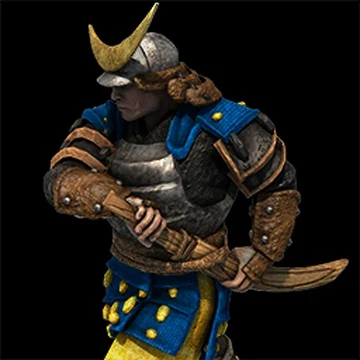
Castle Age · trains at the Castle
45 food 30 gold · 9s
Horned kabuto, bare face.

Imperial Age · upgrade 750 food, 650 gold
45 food 30 gold · 9s
Note the men-yoroi battle mask and the sashimono banner on the back.
| Stat | Samurai | Elite Samurai |
|---|---|---|
| Hit points | 70 | 80 +10 |
| Attack | 10 | 12 +2 |
| Bonus vs unique units | +10 | +12 +2 |
| Armour (melee / pierce) | 1 / 1 | 1 / 1 |
| Rate of fire | 1.43s | 1.43s |
| Speed | 1.0 | 1.0 |
| Charge triggers at | 2–6 tiles | 2–7 tiles |
| Training time | 9s | 9s |
| Cost | 45F 30G | 45F 30G |
That 1.43s rate of fire is the headline number. The Samurai's base rate is 1.9 seconds; the Japanese +33% infantry attack speed bonus cuts it to 1.43, which ties it with a Japanese-trained Condottiero as the fastest-attacking infantry unit in the game. An Elite Samurai deals 2 less damage per hit than a Champion and still out-trades it. The charge attack adds +1 attack built up over 30 seconds, and a 25% speed burst that fires when the target is inside the trigger range and dissipates on impact — which is what lets Samurai close on archers and siege that used to kite them freely.
Buildings, Eagle Warriors, Pikemen, Elite Skirmishers, light cavalry, and any melee unique unit — Teutonic Knights, Huskarls, Cataphracts, Jaguar Warriors, War Elephants, Boyars.
Archers, Scorpions, Hand Cannoneers, Paladins, Battle Elephants and Legionaries. Also note the bonus does not apply to unique upgrades — Imperial Camel Rider, Imperial Skirmisher, Houfnice, Winged Hussar, Legionary and Savar all take normal damage.
Honest assessment
The Japanese are a top-ten civilization with a genuinely bad late game if the map goes long and closed. Knowing which side of that line you are on is the whole skill of playing them.
Three openings worth learning
These are the three most popular AoE2 Japanese build orders on the ladder: the signature Men-at-Arms rush, a greedier Drush into Fast Castle, and the water opening that makes the fishing bonus pay. Villager numbers are cumulative — villager 11 is your eleventh, counting the three you start with.
Why it works for Japanese: Men-at-Arms are the one Feudal unit that benefits from the attack-speed bonus immediately. A Japanese Man-at-Arms kills a villager in roughly three-quarters of the time everyone else needs, and chews through palisade walls and houses at the same rate. Watch for an Archery Range in the enemy base — if you see one, stop pushing into it and go raid a different resource instead.
Villagers 1–6
Two houses, then all six to sheep.
Villagers 7–9
To wood with a Lumber Camp.
Villager 10
Build the Barracks in a hidden spot, then return to food. Queue 3 Militia.
Villager 11
Lure the first boar.
Villager 12
House, then Mill on berries.
Villagers 13–15
Berries. Send the three Militia out now — the goal is to force walls and delay, not to win.
Villager 16
Lure the second boar.
Villagers 17–19
Food under the Town Center, then farms as the sheep run out.
Villagers 20–22
To gold with a Mining Camp.
Feudal Age
Loom, then click up at ~22 pop. Build Market and Blacksmith with two wood villagers while advancing.
Castle Age
Click up as soon as you land. Research Double-Bit Axe and Horse Collar on the way.
In Castle
Choose your line: a Castle for Samurai if the opponent leans on a unique unit, Knights for raiding, or Crossbows plus Long Swordsmen as a safe default. Add a second Town Center and Wheelbarrow either way.
Why Japanese can afford this: a Drush costs you a Barracks and 3 Militia, and the Barracks is the only building here that is not discounted — but your Mill and Mining Camp both are, which roughly refunds the Militia in wood. On Arena, add Yasama after your first Castle: two extra arrows per tower is a serious deterrent against Castle Age pushes, and it is far cheaper than teching into siege you do not have.
Villagers 1–6
Two houses, then sheep. Scout the shoreline for deep fish before you commit to a Dock position.
Villager 7
Build the Dock and start Fishing Ships on continuous production. Do not stop them.
Villagers 8–10
To wood — you need it for both boats and buildings.
Villager 11
Lure the first boar.
Villager 12
House, then Mill on berries.
Villagers 13–16
Split between berries and wood. Fish is carrying your food, so wood is the bottleneck.
Villagers 17–20
Wood and a small gold detail with a Mining Camp.
Feudal Age
Loom, then click up around 23 pop. Add a second Dock immediately.
On landing in Feudal
Fishing Lines first, then start Galleys from one dock while the other keeps making Fishing Ships. Your ships have double the hit points — contest early, do not hide.
Castle Age
Gillnets, War Galleys, and a Town Center from the food surplus. Careening if the opponent commits to fire ships.
Why this is the strongest Japanese opening: +100% hit points means an enemy galley needs roughly twice as long to kill each Fishing Ship, so raids that would cripple another civ merely annoy you. The work-rate bonus climbs each age — +5% Dark, +10% Feudal, +15% Castle, +20% Imperial — so the longer the game runs on water, the further ahead your food economy gets. Even on Arabia, if there is shore fish within reach of your Town Center, a Dock and two Fishing Ships are worth building.
Playing the civ, age by age
Japanese strategies all follow the same arc: convert a Feudal Age advantage into map control, then spend it before Imperial arrives and takes your cavalry and siege away.
Age I–II
~9:00 – 16:00
This is where the civ is strongest and it is not close. Men-at-Arms into Archers is the default, but the Men-at-Arms themselves are the point — three of them arriving 33% faster than the opponent expects will kill villagers, force walls, and buy you a free Castle Age.
Against archer civs, add Spearmen and pull your Men-at-Arms off the front. Against Scouts, your Militia already beat them in a straight fight. Do not over-invest: six to eight Men-at-Arms is plenty, and every one after that is a villager you did not make.
Age III
~16:00 – 26:00
Three viable lines. Crossbow plus Long Swordsman is the safe one and uses the full archer tree. Knights are genuinely good right now — Bloodlines and Husbandry are both available and the Paladin problem is still an age away. Samurai are a scouting-dependent choice: build the Castle only if the opponent has committed to a unique unit you can punish.
Add a Siege Workshop for Mangonels against archer masses. If the map is closed, this is also the moment to take Yasama and tower your gold.
Age IV
26:00 +
Your stable is finished — no Paladin, no Hussar, no Plate Barding Armor — so pivot fully. Champion and Halberdier with Onagers is the core. Add Heavy Cavalry Archers if the enemy leans on Arbalests, because the +2 damage against ranged units turns that matchup around.
Take Kataparuto early. Without Bombard Cannons, trebuchets are your only real siege answer, and fast pack/unpack is what makes a treb push survivable. In a pure trash game, Halberdiers swinging 33% faster are among the best in the game — a fully upgraded Japanese Halberdier will kill most Paladins.
Any age
Scouting notes
If you are on the other side: wall early, because the Feudal window is the whole threat. Massed Arbalests with Mangonel support beat Japanese infantry at every stage. In Imperial, Paladins and Bombard Cannons are things they simply cannot answer in kind.
On water, do not try to trade Fishing Ships — deny the fish with Demolition Rafts instead, and remember they never get the Heavy Demolition Ship.
Watch a pro run it · full 1v1
The clearest demonstration of how Japanese solve the problem this whole page keeps circling: no Bombard Cannon, no Siege Ram, no Siege Onager, so how do you actually break someone open? The answer is Yasama. Five Keeps with two extra arrows each cost roughly what one Castle costs in stone, out-shoot it between them, and — unlike a Castle — can be built forward as the army advances. It is a Bombard Tower push for a civilization that never gets Bombard Towers. The Skirmishers are there because the opponent is Ethiopians, an archer civ; they screen the Champions while the towers do the pushing.
1v1 Arabia · Japanese vs Ethiopians DauT vs Heart Open on YouTube
What you can and cannot build
Strikethrough entries are the ones Japanese do not get. Four of the five gaps are in cavalry and siege — which is the whole reason the civ wants the game to end before minute thirty.
Nothing missing, and every upgrade multiplies with the attack-speed bonus. This is the reason to pick the civ.
A full ranged tree is what keeps Japanese flexible. Cavalry Archers also carry the +2 bonus against ranged units.
Castle Age Knights are fully viable. Imperial cavalry is not — and Plate Barding Armor is missing too.
The civ's real weakness. Kataparuto trebuchets are the compensation, and they are the only compensation.
Infantry and archer upgrades are complete. Only the final cavalry armour is missing — consistent with the rest of the stable.
An excellent navy with a single hole. Combined with the Fishing Ship bonus, water maps are the Japanese comfort zone.
Strong Monks. Without Heresy your own units can be converted back, so watch monk-heavy civs closely.
The economic tree is complete but has no multiplier behind it off water. Defensively, Yasama is doing the heavy lifting.
Where Japan appears in the game
Japan has never had a campaign of its own. Instead it is scattered across four playable scenarios in three different campaigns — plus one where you fight against them.
Battles of the Conquerors
1582 · Honnō-ji Incident & Yamazaki
The oldest and best known. You open holding four Samurai around Lord Nobunaga, fail to save him — that is scripted — and then play as Hideyoshi, taking Osaka as a base before destroying the three castles of Kyoto in revenge.
Tip: Arbalesters and Hand Cannoneers with Monk support, and put Kataparuto-boosted trebuchets on the castles. Watch the rebel Monks — they are hunting relics while you attack.
Battles of the Forgotten
1183 · Genpei War
A co-op scenario where both sides play as the Japanese: Minamoto no Yoshinaka's roughly 5,000 men against a Taira army several times that size, fought through a mountain pass. Yoshinaka's allies include the Hōjō clan and local irregulars.
Tip: The map rewards terrain, not economy. Hold the pass, let the numbers come to you, and use the ally triggers rather than trying to out-produce the Taira.
Victors and Vanquished
Sengoku jidai, ending 1582
A sandbox-style clan war and a direct prequel to Kyoto. You pick one of six clans — Oda, Takeda, Uesugi, Mori, Ōtomo or Chōsokabe — and the rest become rivals. The Mori get Ninja, and the True Pure Land technology (Jōdo Shinshū) spawns warrior monks.
Tip: Replayable in a way most AoE2 scenarios are not — each clan starts in a different corner with a different problem. Try Chōsokabe on Shikoku for the hardest opening.
Victors and Vanquished
16th century · Kyūshū
Shimazu Takahisa's campaign to control the nine provinces of Kyūshū, against the Itō, Ryūzōji and Ōtomo clans, minor lords and pirates — and eventually the Shōgun himself, who starts as your ally. The only Japanese scenario with non-Japanese factions in it.
Tip: Kill the enemy Docks first. Once they are gone the naval raids stop entirely and you can boom freely, then finish with towers, heroes and Cannon Galleons.
Battles of the Conquerors · you play Korea
1598 · Imjin War
The one where the Japanese are the enemy. You command Yi Sun-sin's Korean fleet against a Japanese force withdrawing from the peninsula. Historically Yi won the battle and was killed by an arquebus shot during it — a detail the scenario handles with unusual restraint.
Tip: Worth playing precisely because it shows the Japanese navy from the receiving end — and explains why the civ's naval identity is fishing rather than warships.
Design versus record
Some of the Japanese design is unusually well researched — Yasama and Kataparuto are both real things, precisely named. Other parts quietly invert what actually happened.

In the game
A Castle-trained swordsman built to hunt other elite units, with the katana as its defining weapon.
In history
Early samurai were defined by mounted archery — kyūba no michi, the way of the horse and bow. By the Sengoku period the primary battlefield weapon was the yari spear, and later the matchlock. The katana was a sidearm and a status object, never the main instrument of war.
Verdict: the most famous inversion in the civ — though the Cavalry Archer bonus is a late apology for it.
In the game
A Castle Age unique technology that adds two arrows to the Watch Tower line.
In history
Japanese castles were pierced with firing ports: yazama for arrows, teppōzama for guns, cut in triangles, circles and squares through the plaster walls. Himeji alone has around a thousand. The name and the mechanic both land.
Verdict: accurate, and one of the better-named unique technologies in the game.
In the game
The Imperial unique technology, making trebuchets fire and pack up much faster.
In history
The name is spelled the way Japanese renders foreign loanwords — a deliberate signal that this is imported technology. It points at Portuguese and Dutch contact from the 1540s onward, which brought firearms and European siege engineering, and which ended the Sengoku period at sieges like Osaka. Counterweight trebuchets themselves were barely used in Japan; sieges were won by starvation, fire and mining.
Verdict: clever framing, wrong machine — the trebuchet stands in for cannon the civ was not given.
In the game
No Paladin, no Hussar, no final barding armour.
In history
Native Japanese horses were small and there was no European-style shock cavalry charge; mounted samurai fought as archers and skirmishers in broken, terraced country. Takeda Shingen's cavalry had a fearsome reputation, but nothing in the record resembles a Paladin.
Verdict: a balance decision that happens to be historically defensible.
In the game
Double hit points and a work rate that improves every age.
In history
An island economy on limited arable land leaned heavily on the sea for protein and on coastal shipping for trade. Choosing fishing rather than warships as the naval bonus is a more honest read of medieval Japan than a war fleet would have been.
Verdict: the most quietly accurate bonus in the set.
In the game
Japan's four scenarios cover the Genpei War and the Sengoku period only.
In history
The Mongols attempted invasions in 1274 and 1281 and were repelled both times, the second fleet wrecked by a storm later mythologised as the kamikaze. It is the obvious scenario, and it has never been made — while Japan appears as the losing side at Noryang Point instead.
Verdict: the biggest omission in the civ's campaign coverage.
Quick answers